

Photonic computing startup Lightmatter is taking its massive shot at the speedily rising AI computation current market with a hardware-program combo it statements will assistance the field amount up — and conserve a large amount of energy to boot.
Lightmatter’s chips essentially use optical flow to resolve computational processes like matrix vector products and solutions. This math is at the coronary heart of a whole lot of AI perform and at this time done by GPUs and TPUs that specialize in it but use standard silicon gates and transistors.
The concern with people is that we’re approaching the boundaries of density and as a result speed for a presented wattage or sizing. Innovations are however staying designed but at good expense and pushing the edges of classical physics. The supercomputers that make instruction models like GPT-4 doable are huge, take in substantial amounts of electric power and create a good deal of squander heat.
“The largest providers in the entire world are hitting an strength power wall and enduring massive issues with AI scalability. Classic chips press the boundaries of what is achievable to awesome, and facts centers produce progressively large power footprints. AI innovations will sluggish noticeably unless we deploy a new answer in facts centers,” reported Lightmatter CEO and founder Nick Harris.
“Some have projected that training a solitary massive language design can acquire more power than 100 U.S. households eat in a year. Moreover, there are estimates that 10%-20% of the world’s complete energy will go to AI inference by the finish of the 10 years except if new compute paradigms are made.”
Lightmatter, of system, intends to be one particular of all those new paradigms. Its approach is, at minimum perhaps, more rapidly and more economical, making use of arrays of microscopic optical waveguides to allow the light effectively execute logic functions just by passing as a result of them: a kind of analog-electronic hybrid. Given that the waveguides are passive, the most important electric power draw is creating the light alone, then reading and handling the output.
1 definitely intriguing component of this variety of optical computing is that you can maximize the energy of the chip just by applying additional than a single color at after. Blue does a single procedure when pink does a different — however in apply it’s more like 800 nanometers wavelength does one particular, 820 does an additional. It is not trivial to do so, of study course, but these “virtual chips” can vastly enhance the sum of computation done on the array. Twice the hues, 2 times the energy.
Harris started out the organization based mostly on optical computing do the job he and his group did at MIT (which is licensing the applicable patents to them) and managed to wrangle an $11 million seed round again in 2018. 1 investor explained then that “this isn’t a science job,” but Harris admitted in 2021 that while they knew “in principle” the tech must function, there was a hell of a lot to do to make it operational. Fortuitously, he was telling me that in the context of traders dropping a more $80 million on the firm.
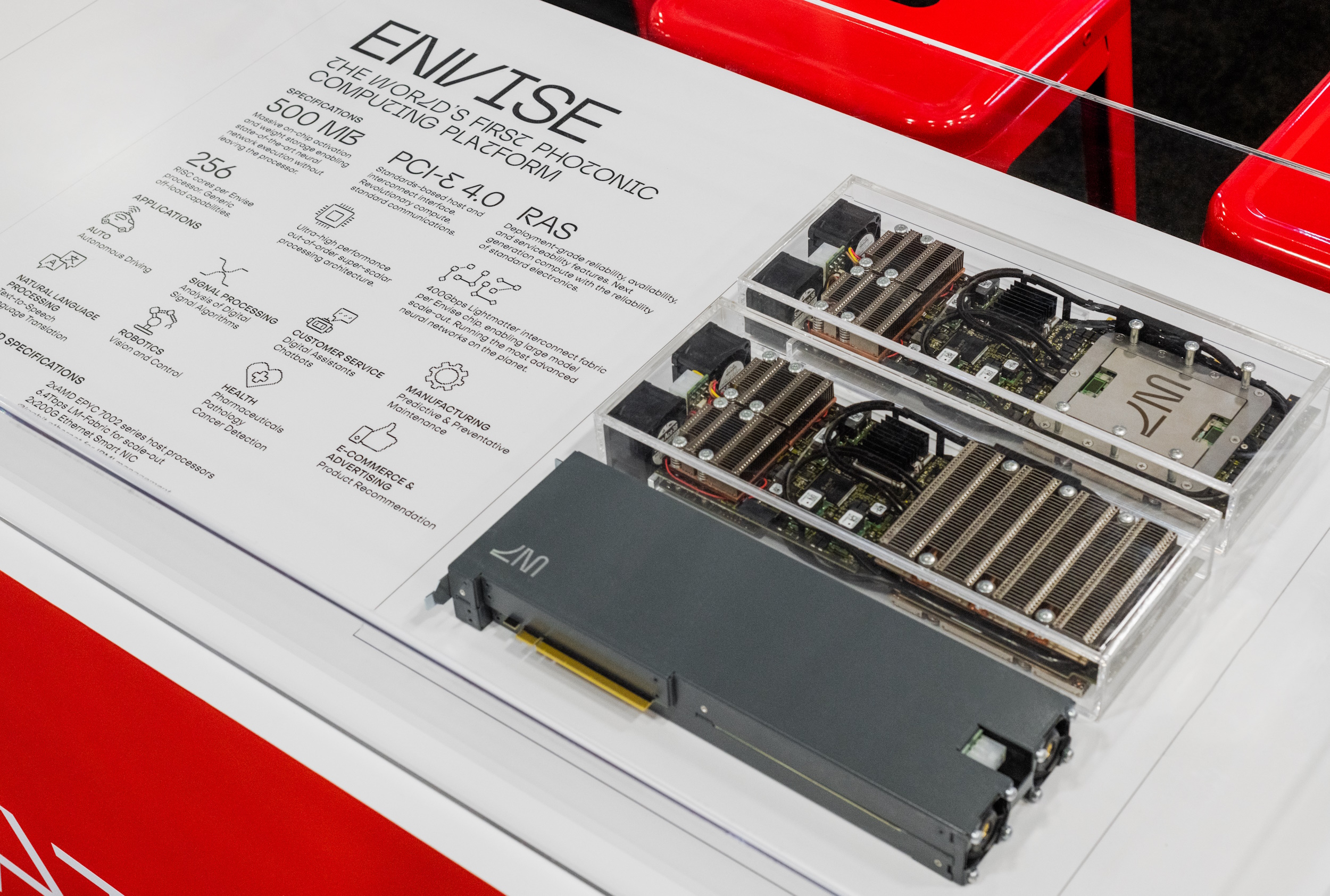
Now Lightmatter has raised a $154 million C spherical and is planning for its true debut. It has various pilots likely with its full stack of Envise (computing hardware), Passage (interconnect, crucial for massive computing operations) and Idiom, a software package system that Harris suggests should really let equipment discovering builders adapt speedily.
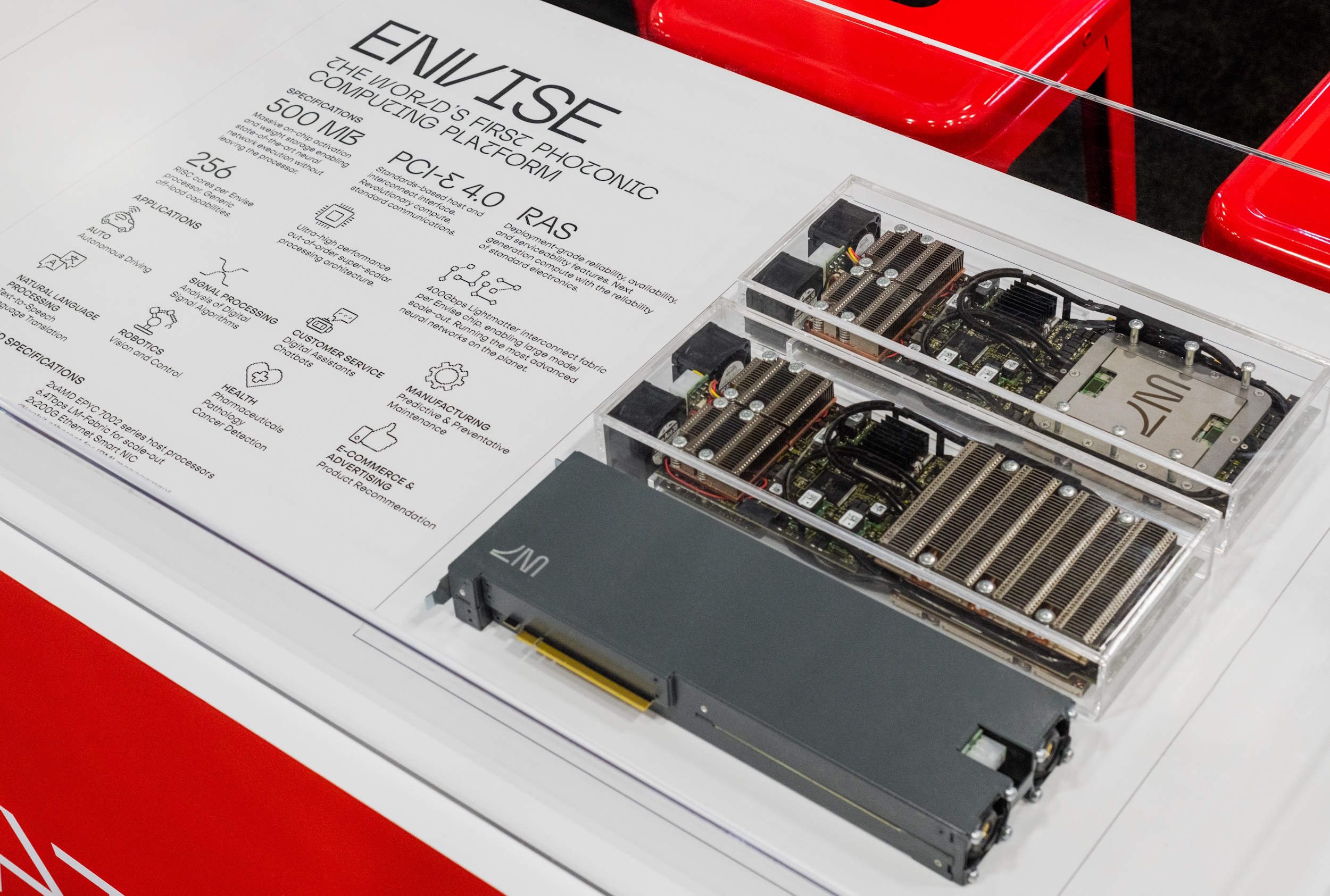
A Lightmatter Envise device in captivity. Picture Credits: Lightmatter
“We’ve developed a program stack that integrates seamlessly with PyTorch and TensorFlow. The workflow for equipment finding out builders is the similar from there — we choose the neural networks constructed in these business regular applications and import our libraries, so all the code runs on Envise,” he described.
The organization declined to make any precise claims about speedups or efficiency advancements, and due to the fact it is a different architecture and computing process it is really hard to make apples-to-apples comparisons. But we’re undoubtedly chatting along the lines of an purchase of magnitude, not a measly 10% or 15%. Interconnect is likewise upgraded, considering that it’s ineffective to have that amount of processing isolated on one particular board.
Of class, this is not the variety of basic-objective chip that you could use in your laptop it’s highly distinct to this activity. But it is the deficiency of endeavor specificity at this scale that looks to be keeping again AI enhancement — though “holding back” is the wrong phrase considering the fact that it is going at wonderful speed. But that growth is massively expensive and unwieldy.
The pilots are in beta, and mass output is planned for 2024, at which issue presumably they should to have ample feed-back and maturity to deploy in details centers.
The funding for this round arrived from SIP Global, Fidelity Administration & Research Corporation, Viking World-wide Buyers, GV, HPE Pathfinder and current investors.